The Glucose Monitor for Your Home: Why Real-Time Insight Is an Affordability Tool
Real-time feedback changes behavior in medicine. It does the same for household energy bills.
A doctor’s view of the energy bill
At GridFWD, I shared a panel with Utah State Rep. Raymond Ward. In his day job, Rep. Ward is a family physician. When the conversation turned to real-time energy data, he made a connection that really resonated.
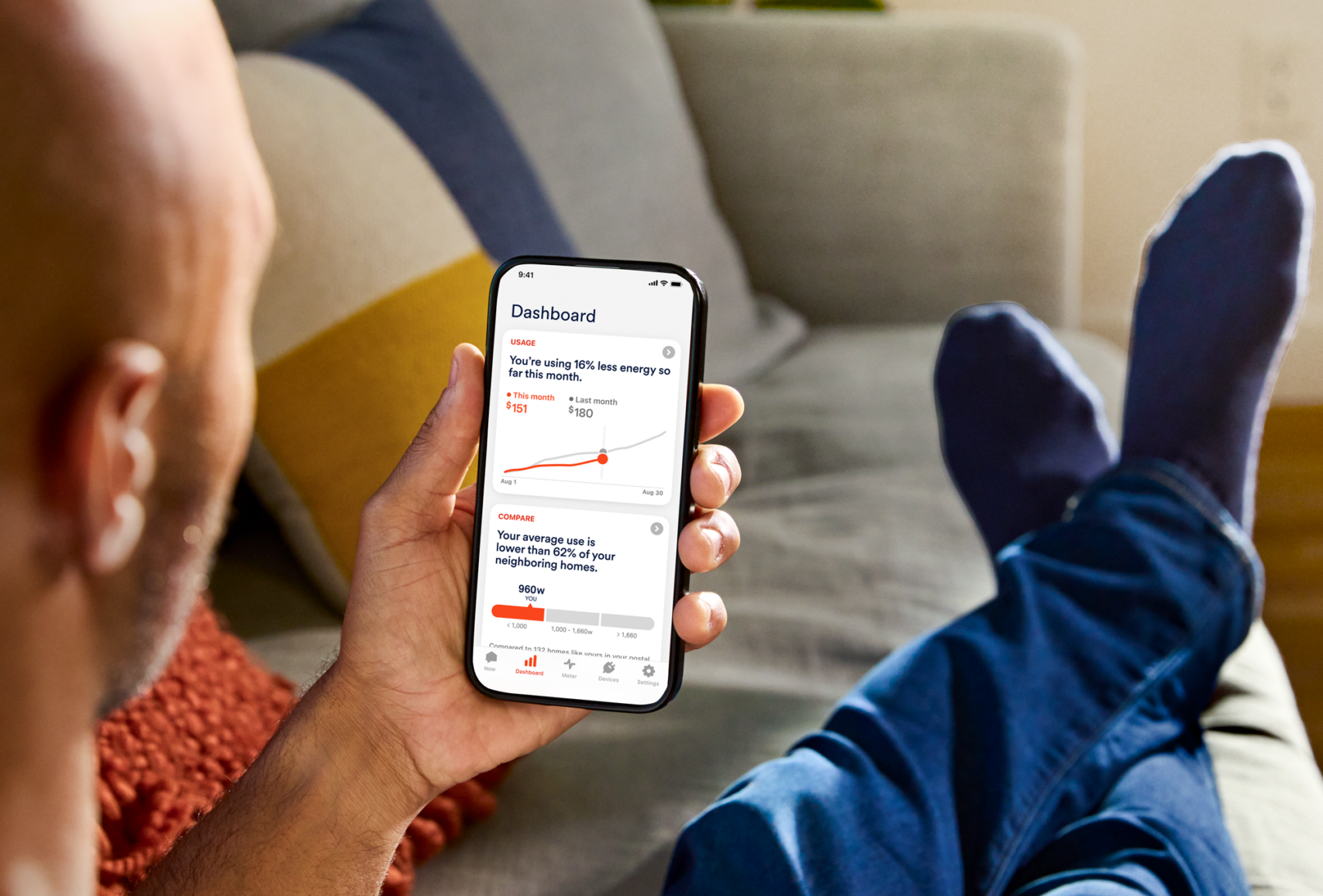
He compared the insights available through the Sense mobile app to the continuous glucose monitors his diabetic patients wear. Those monitors give patients a live reading of their blood sugar, day and night. He has seen strong results with those patients simply by putting real-time information in their hands.
That is the magic of behavioral energy cost savings story in one idea. People change what they can see.
The energy bill is an A1C test
Before continuous monitors, many diabetic patients relied on periodic checks, including a lab test that shows average blood sugar over the past few months. An average can flag a problem. It cannot show which choice caused it.
The monthly electric bill works the same way. It arrives weeks after the energy was used. It shows a total, not a cause. It cannot tell you the dehumidifier ran all night or the garage freezer never stops.
Absent a feedback loop, most people guess. Then they wait 30 days to learn whether the guess worked.
Why visibility matters more every month
Cost pressure on households is real, and it is national. The U.S. Energy Information Administration expects residential electricity to average 18.2 cents per kilowatt-hour in 2026 (EIA). East Coast households face the steepest climb, with average annual price growth projected as high as 7% over the next two years (Facilities Dive).
Winter heating season raises the stakes further.
Customers cannot set their rate. They can control how much energy they use, and when. That control only works when they can see what is happening at home as it happens.
Rhode Island shows what this looks like at scale
In September, Rhode Island Energy (RIE) and Sense launched the Sense mobile app for customers with new advanced meters (AMI 2.0). It comes at no additional cost to eligible customers and needs no extra hardware (Rhode Island Energy). It is one the first utilities to launch Sense at scale.
The app runs on the Landis+Gyr Revelo meters RIE is installed across its service area. The Sense-enabled meter becomes the glucose monitor.
For the technology behind it, read Sense CEO Mike Phillips on AMI 2.0: From Promise to Proof.
What customers see right away
The value starts the day a customer opens the app. Four features do most of the early work.
- Real-time view. Turn on the oven or the kettle and watch the home’s power use jump. Cause and effect, on screen, in seconds.
- Always On. Sense shows the load that runs around the clock: chargers, set-top boxes, a second fridge. It is the baseline a household pays for every hour, whether anyone is home or not.
- Device detection. Sense learns the electrical signatures of common devices and systems, so customers can see where their electricity goes.
- Alerts. Custom notifications flag equipment left running and unusual spikes in use.
This is the glucose monitor effect. A patient sees the spike after a meal and learns what caused it. A homeowner sees the spike from a space heater and decides whether it is worth the cost. Each decision is informed, and the feedback is immediate.
A customer’s view of the energy bill
One Sense mobile app user explains it with groceries. Imagine shopping every week for a month. You scan your items at checkout but never pay. Then one bill arrives for the whole month, and it is far more than you expected. You think about the food that spoiled and the food you never used, and the total makes no sense. That is how most households experience electricity. Now this customer checks the Sense app every night before bed and sees exactly how much energy the home used that day. “You know whether you really needed to use all that energy,” they said, “or whether you mistakenly left a couple ceiling fans on.” A monthly surprise becomes a daily decision.
Real-time feedback creates savings that last
The harder question is whether early changes stick. A multi-year program with Alliant Energy in Wisconsin says yes.
Launched in 2019, the program put Sense in more than 900 households, including rural and low- to moderate-income customers. Cadmus Group evaluated the results and filed them with the Public Service Commission of Wisconsin. The findings:
- Participants cut electricity use by 4% on average, from behavioral changes alone.
- Savings lasted at least four years and grew with each year of participation, reaching up to 518 kWh per participating home by year three.
- Participants saved an average of $135 per year.
- 85% said they intended to keep their new energy habits long term.
“I used to participate in a demand response program that controlled my AC, but I never knew what I was actually saving. With Sense, I could see it immediately, and that kept me engaged.”
Alliant Energy program participant
Savings that grow rather than fade point to habit, not novelty, showing that the feedback builds engagement and empowers customers to take action.
What this means for utilities, regulators, and advocates
Three points matter for anyone thinking carefully about the energy affordability challenge.
- It builds on infrastructure customers already fund. Where utilities deploy AMI 2.0, software on those meters turns them into an affordability tool.
- It removes the cost barrier. With no hardware to buy, access does not depend on income.
- It builds trust. In the Alliant program, 54% of participants felt more positively about their utility after taking part.
- It is a dynamic and updateable tool. Like a mobile phone you can update software to add features, make improvements, and continue to meet customers where they are.
You can’t manage what you see once a month
The lesson from Rep. Ward’s patients is simple: people act on what they can see. Household energy usage is no different.
Affordability is not a single program or a single rebate. It is a daily practice, and it starts with visibility.
For a deeper look at how regional constraints shape affordability, read our white paper, More From the Grid We Have.