How to get more from the grid we have
Local grid constraints are driving rising costs. Grid-edge intelligence helps utilities unlock capacity already embedded in the distribution system.
Download the reportEnergy affordability is an urgent problem
As electricity costs rise, the pressure is not only coming from the new demand or how much energy is used overall. Many of today’s grid constraints are local, time-bound and shaped by how load behaves across the distribution system. That makes affordability increasingly a question of when and where electricity is used, and how well utilities can see and manage demand.
Peak demand often occurs for fewer than 100 hours per year, yet it drives a disproportionate share of grid infrastructure investment
U.S. Department of Energy; National Renewable Energy Laboratory
More than half of U.S. utility capital spending is now directed toward transmission and distribution infrastructure
Edison Electric Institute; S&P Global Commodity Insights
Boosting annual system utilization by 10% integrates the new load at lower cost, cutting customer rates by 3.4%
The Brattle Group
A challenge defined by local constraints
Energy affordability is shaped by local conditions, making each region of the country different. Climate, infrastructure age, regulatory structure and load growth all influence where and why costs are rising.
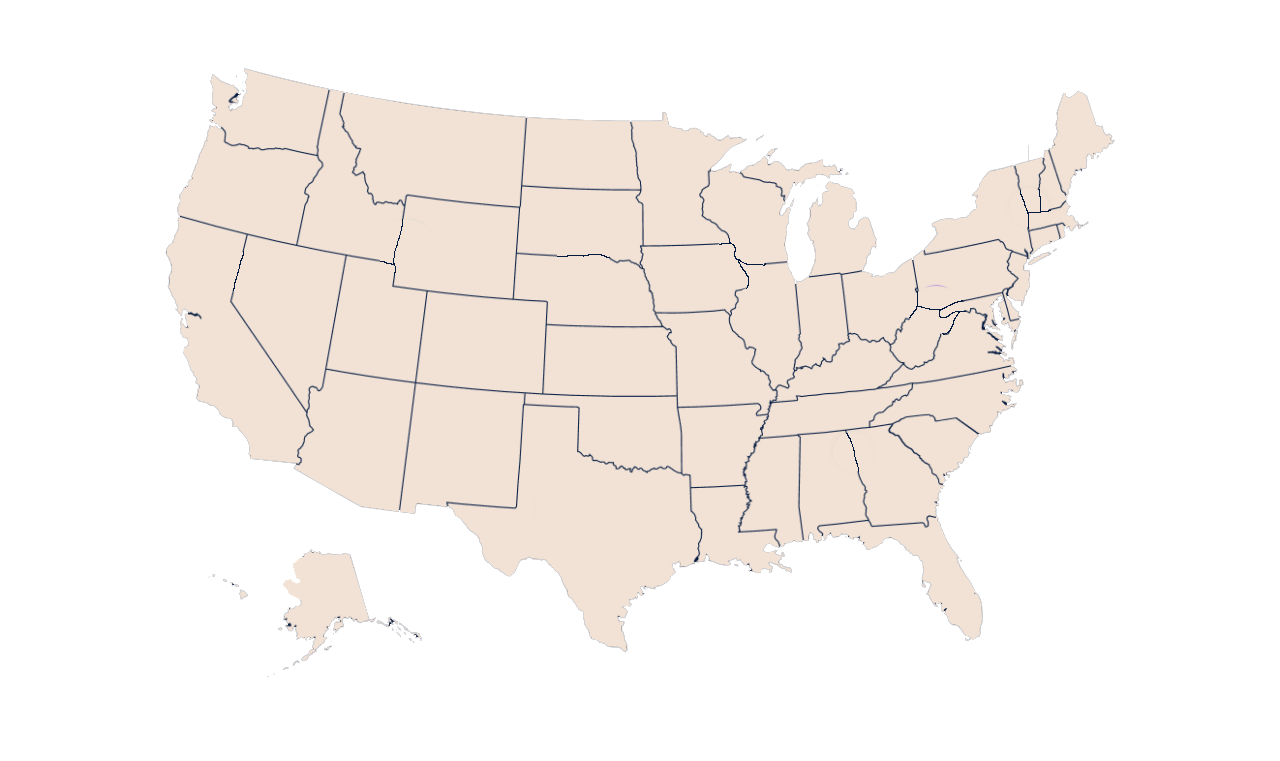
What this map shows
Regional cost drivers and where targeted distribution intelligence can reduce infrastructure spending and improve affordability
What this map shows
Regional cost drivers and where targeted distribution intelligence can reduce infrastructure spending and improve affordability
- 1
- 2
- 3
- 4
- 5
- 6
- 7
- 8
- 9
1 Northeast
Maine, New Hampshire, New York, Vermont, Massachusetts, Rhode Island, ConnecticutSeasonal peaks, particularly in winter, and exposure to wholesale market volatility drive affordability challenges. Constraints are often tied to heating electrification and limited local generation during peak periods. Distribution-level visibility enables targeted peak reduction and more precise load shaping, reducing reliance on expensive wholesale procurement.Peak volatilityGrowth pressure2 Mid-Atlantic / PJM
New Jersey, Pennsylvania, Delaware, Maryland, Virginia, West Virginia, Ohio, District of ColumbiaLoad growth from electrification and large commercial demand is colliding with transmission expansion needs and interconnection backlogs. While hyperscale data centers are part of the narrative, many constraints emerge at the feeder and substation level. Distribution intelligence allows utilities to sequence upgrades more precisely and avoid overbuilding for localized demand spikes.Peak volatilityGrowth pressureAging infrastructure3 Southeast
North Carolina, South Carolina, Georgia, Florida, Alabama, Mississippi, Tennessee, KentuckyRapid population growth and economic development are driving sustained load increases. Vertically integrated utility structures place pressure on long-term capital planning and rate stability. Distribution-level insight enables proactive infrastructure planning and targeted flexibility, helping utilities manage growth without uniformly expanding capacity.Growth pressureWildfire/climate risk4 Midwest
Illinois, Indiana, Michigan, Wisconsin, Minnesota, Iowa, MissouriAging infrastructure and ongoing capital replacement cycles are major drivers of rising rates. Load growth is moderate but uneven, with localized constraints emerging across older distribution networks. Enhancing visibility through AMI 2.0 investments allows utilities to prioritize upgrades and extend the useful life of existing assets.Aging infrastructureGeographic dispersion5 Great Plains
North Dakota, South Dakota, Nebraska, Kansas, Oklahoma, Arkansas, LouisianaLower population density and long-distance distribution infrastructure define the region. Agricultural load, industrial demand, and extreme weather contribute to variability. Distribution intelligence supports more efficient management of long feeders and improves reliability across sparsely populated service areas.Peak volatilityGeographic dispersion6 Texas
An isolated grid with high exposure to extreme weather events and rapid load growth creates unique reliability challenges. Peak demand events are increasingly acute, and wholesale price volatility remains a concern. Distribution-level intelligence supports localized resilience, faster response to emerging constraints, and more effective peak management.Peak volatilityGrowth pressureIsolation7 Mountain West
Colorado, Utah, Idaho, Montana, Wyoming, New MexicoLarge geographic service territories, long feeders, and rapidly growing metropolitan areas create dispersed and uneven load patterns. Climate variability adds additional stress to infrastructure. Visibility across the distribution system allows utilities to manage constraints that are geographically distributed but operationally interconnected.Wildfire/climate riskGeographic dispersion8 California & Western States
California, Oregon, Washington, Nevada, ArizonaWildfire risk, climate variability, and aggressive electrification targets are reshaping grid investment priorities, making pushing past the limits of field equipment a real concern. The more limits are exceeded, the more equipment lifespan degrades. For example, wildfire-related costs now account for between 10% and 24% of total revenue requirements for California's major investor-owned electric utilities, according to the CPUC.⁴ Distribution intelligence and automated control enable utilities to target hardening investments and reduce risk without system-wide overbuild.Growth pressureWildfire/climate riskAging infrastructure9 Alaska & Hawaii
Alaska, HawaiiHighly isolated grid systems with limited redundancy require precision in both planning and operations. Fuel costs, logistics, and climate conditions further increase system sensitivity. Localized visibility and coordinated flexibility are essential to maintaining reliability and controlling costs without overbuilding infrastructure.Wildfire/climate riskGeographic dispersionIsolation
Efficiency without flexibility is incomplete. Flexibility without visibility is imprecise
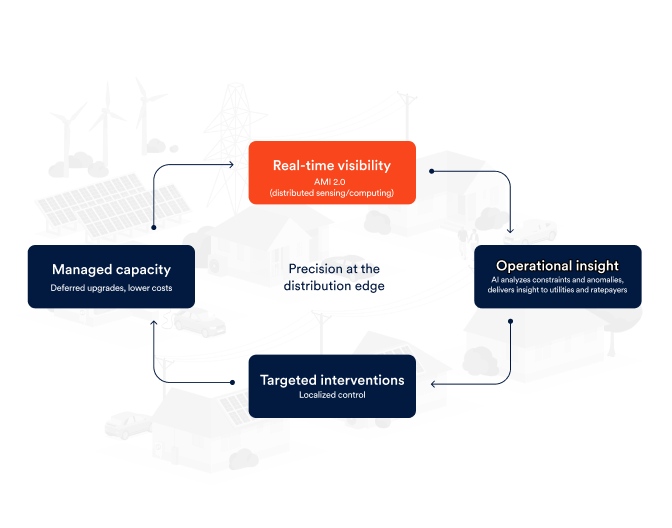
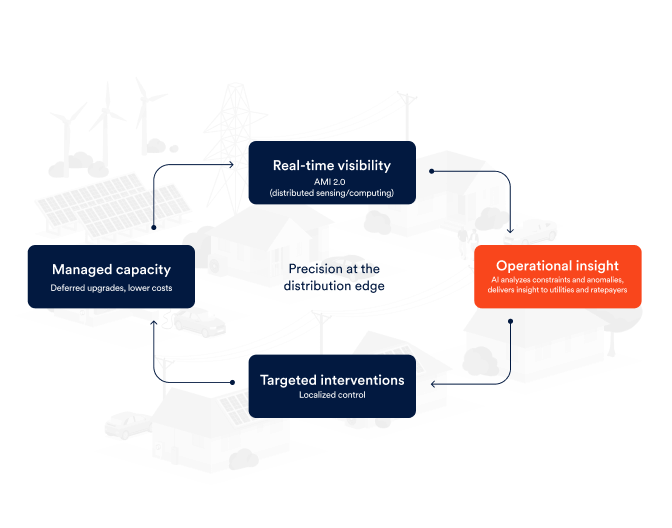
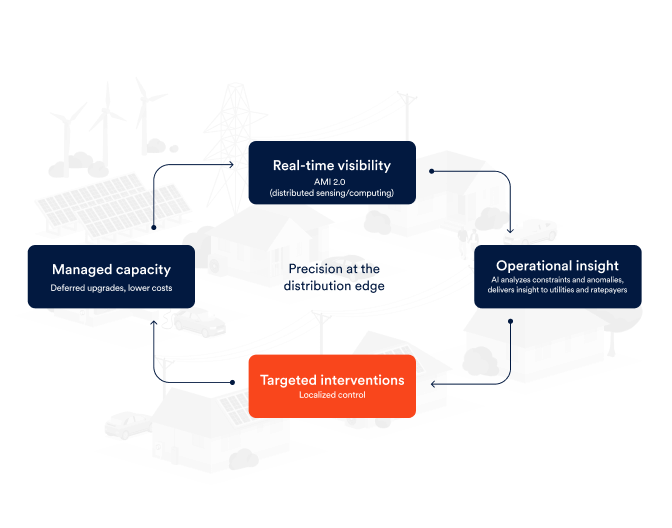
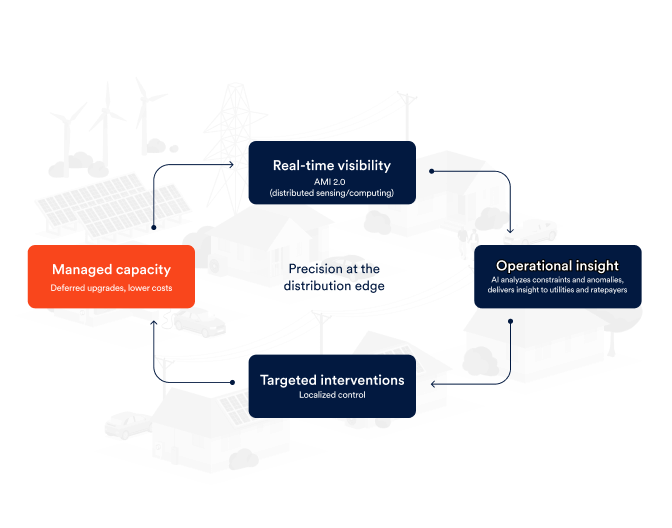
Utilities can unlock capacity already embedded in the system, but that requires a coordinated approach to real-time visibility, targeted flexibility and actionable efficiency. This is a shift that starts at the grid edge.
-
Reveals system conditions through AMI 2.0, distributed sensing and edge computing.