The electrical grid is the largest physical network in the world and is facing the combined demands of load growth, reliability and resilience, and affordability. With data centers and electrification driving new demand, utilities are struggling to keep pace. Simply building more grid infrastructure takes too long and costs too much.
The clear solution is to make the grid more intelligent. The grid is currently underutilized: recent figures reported by Dominion Energy showed that its distribution and transmission networks have utilization rates of 41% and 33%, respectively. The reason for this is that utilities build their grids to handle peak loads – they are designed around the forecasted peak hour of the year. Most of the time the actual load is much lower. If we could find ways to reduce the peaks and fill the valleys, we could support more capacity without increasing costs and lower electric rates for everyone.
The promise of the smart grid
This is exactly the promise of the smart grid – if we can track the power flow throughout the grid in real time and influence when and where power is used, we can better match load to available grid capacity. This notion of a smart grid gained widespread recognition between 2003 and 2005. However, progress has been slow. The grid is still largely unmonitored past the substation level, and there is still very little ability to influence loads based on local grid conditions.
Intelligence at the edge of the network
When we started Sense, we made the bet that this would be solved not by fully instrumenting the grid, but through intelligence at the edge of the grid. This was based on what happened with the second largest physical network in the world: the roads and highways that make up the transportation network.
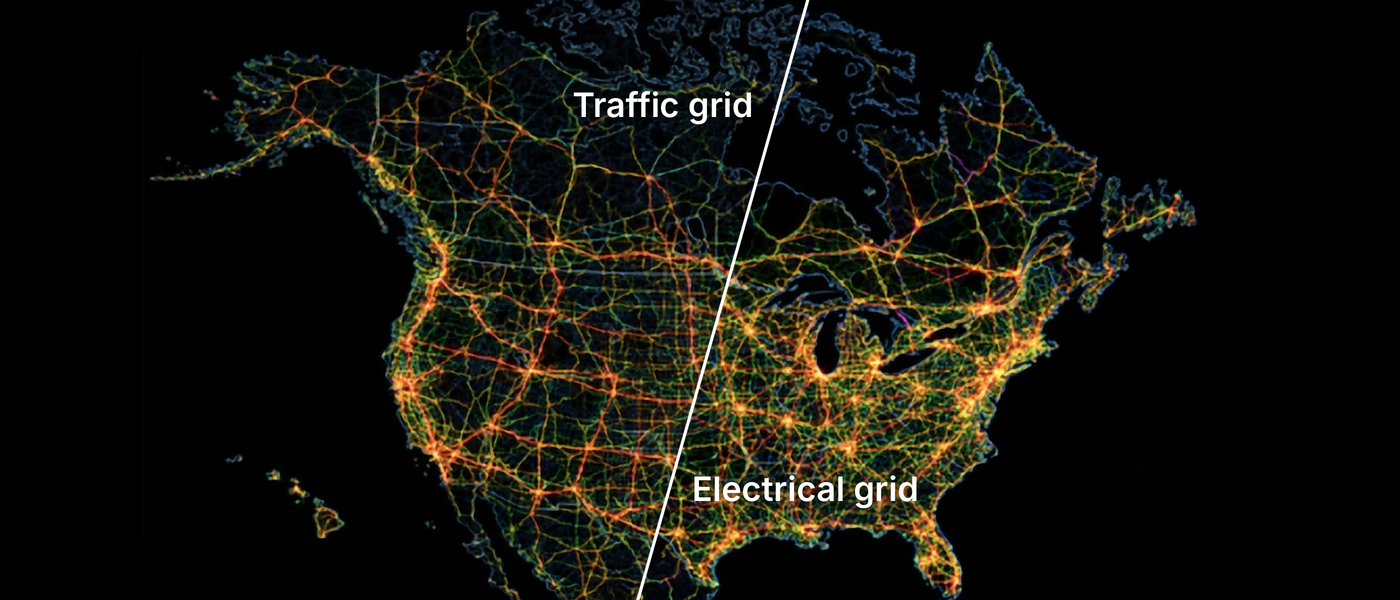
The transportation and electrical networks are surprisingly similar. Both are more than 100 years old and face very similar challenges with congestion. Roads have the same design problem: they are built for peak traffic and underused most of the time. The idea of smart highways is the same as the smart grid – if we can know traffic flow in real time and use that information to influence routes and the timing of travel, congestion can be reduced and utilization increased.
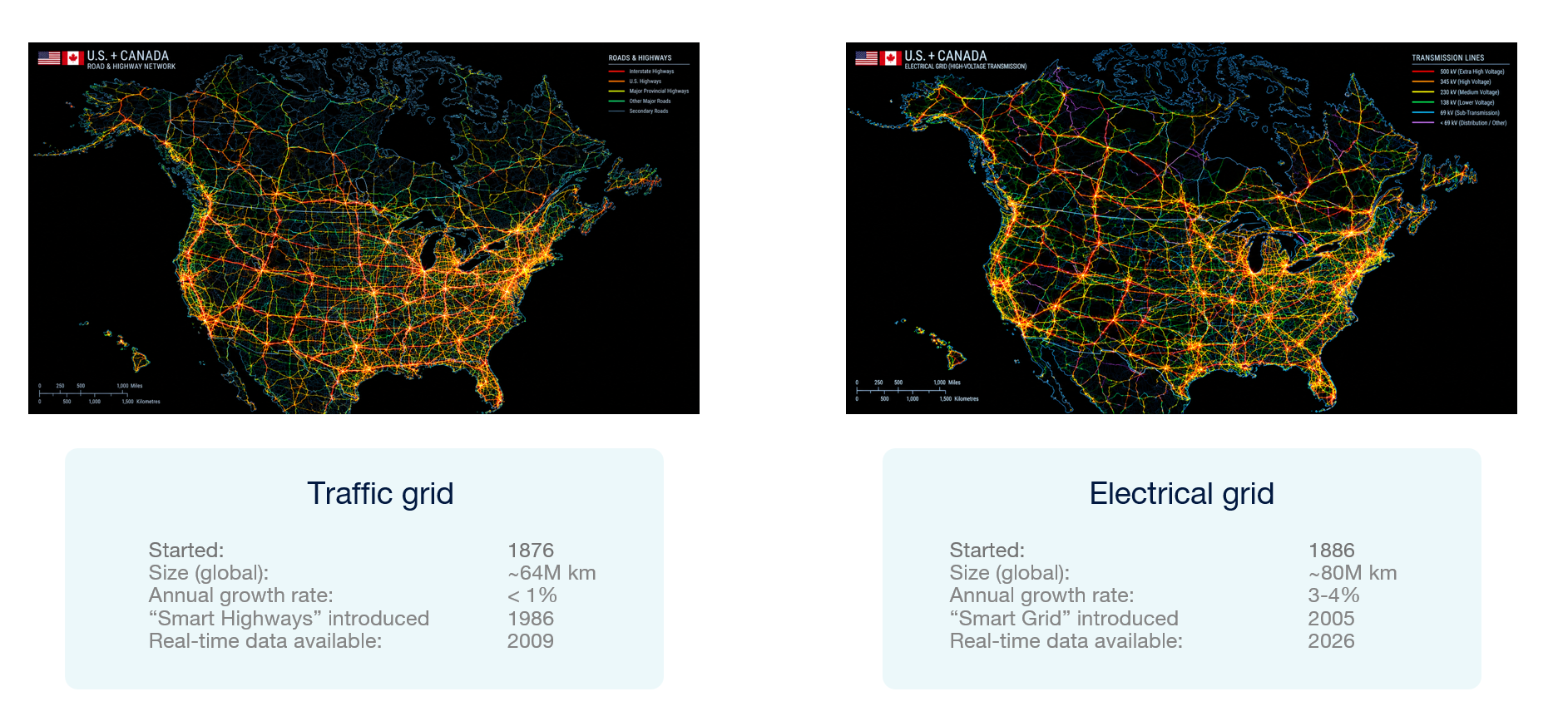
The vision of smart highways was first introduced at the 1939 World’s Fair and serious work began in the mid-1980s with a range of initiatives and funding. The idea was to put sensors in roadways and find ways to influence traffic based on this view of conditions throughout the network. There were many limited-scope projects but this centralized approach didn’t scale despite decades of work. This is not surprising given the expense of retrofitting such a vast network with sensors.
This suddenly changed when smartphones started being used as navigation systems. Once we had millions of phones riding around in cars and trucks and able to report location and speed, companies like Waze and Google were able to turn this information into real-time traffic data for the entire transportation network.
The comparison is dramatic: the U.S. spent roughly $20 billion on smart-highway infrastructure over two decades, and these centralized approaches resulted primarily in small-scale deployments. Smartphones delivered real-time traffic information across the entire network in just a few years, with almost no new infrastructure.
And there is another benefit of intelligence at the edge of the network. The same devices that provide information about the network can also serve as the interface that influences traffic. Smartphones were not developed to be real-time network sensors; they were designed to provide direct consumer benefits, so they already had the ability to influence how the network was being used. Navigation apps with real-time traffic help drivers plan trips and avoid congestion, either by choosing the time they travel or by finding routes around congestion.
Congestion on the grid does not only happen at the system level
The parallels with the electrical grid are clear. There has been progress on smart grid technology, but this has mainly focused on balancing overall supply and demand of the grid. Grid operators have good data on system-wide supply and demand, and there are many programs designed to encourage demand flexibility to better match loads to available supply.
The problem is that congestion on the grid does not happen only at the system level. It occurs throughout the grid, all the way down to where power enters homes and buildings. At these more localized levels, utilities do not have good information about power flow or end uses, nor do they have the ability to influence load based on localized constraints. Returning to our traffic analogy, it is like when we had radio reports about traffic conditions on major highways but no information about local streets.
The platform needed for true edge intelligence
Retrofitting existing grids with sensors all the way down to the neighborhood level would be a massive undertaking. Fortunately, there is another approach: the latest utility smart meters, or AMI 2.0 meters, have the capabilities we need to see the grid from the edge. Smart meters have been deployed since the early 2000s, but this previous generation of meters provided relatively low resolution data – typically 15-minute readings of power made available to utilities hours later. They provided important benefits to utilities, but not enough detail to fully map conditions across the grid.
The latest AMI 2.0 meters now provide the platform needed for true edge intelligence. Just like smartphones, they have access to detailed real-time data, better networking, and, most importantly, have the ability to run software in the meter itself. This combination is what made real-time traffic possible on phones, and it can now make a real-time view of the grid possible from utility meters.
With high-resolution data and the local computation required to process it, we can identify individual loads in homes and buildings, track local energy production from solar and batteries, and see voltage disruptions caused by faults and failures on the grid. In isolation, these capabilities can provide real benefits to consumers – for example, giving them a real-time view of their energy usage to better manage their electricity bills. But the real power comes from combining information from many meters. Just as the speed and location of individual smart phones can be combined to provide real-time traffic information across the transportation network, information about power flow and grid conditions from individual homes and buildings can be combined to create a much more complete picture of the electrical grid.
From grid intelligence to localized control
Completing the analogy, this edge intelligence can also influence how energy is used. Software in meters can communicate with software in EV chargers and heat pumps. Applications that consumers use to manage their energy use can ask for permission to analyze the home and shift loads to match grid conditions based on user preferences. This ability to tie grid intelligence to localized control is key to unlocking grid capacity all the way down to the local level and is made possible by understanding both the home and the grid.
There are, of course, some key differences between traffic congestion and grid congestion. For traffic, the primary mitigation is finding less congested routes. For the grid, timing of energy use is where there are the biggest opportunities. A number of major electrical loads offer significant flexibility in when they use energy – EV charging and water heating, for example – as long as that flexibility is managed intelligently.
Electrical grids are also held to a higher standard. People don’t like traffic jams, but they accept that they happen. Given our increasing reliance on the electrical grid, consistent access to reliable power is becoming even more important. This strengthens the need for the real-time intelligence enabled by latest smart meters, including the ability to see faults and failures in the grid.
It’s arriving right on time
AMI 2.0 has been in development for several years, and the first applications are live. The first wave of smart meters, installed in the early 2000s, is now due for replacement. Most new meter proposals in utility rate cases are for AMI 2.0, so we are entering a phase in which we can make use of this new platform to create the smart grid we need.
It’s arriving right on time. AMI 2.0 can be a major contributor to handling load growth affordably while improving grid reliability at the same time.