Dave Johnson – Head of Australia
From growing up in a Tennessee coal mining business to helping prepare Australia for AMI 2.0, Dave shares how his journey across traditional energy and technology led him to grid-edge AI and Sense.
About Your Role at Sense
What do you do at Sense?
In broad terms, I’m helping Australia prepare for Sense. 2026 marks the first year that AMI 2.0, already deployed and proven in the US, becomes available in Australia.
The good news for government and network operators is that Sense applications are already being validated across multiple large US utilities. We’re building on proven Landis+Gyr grid-edge sensing, metering and compute platforms, giving Australia access to capability that has already been tested and is scaling.
So, I support our global partner Landis+Gyr’s APAC team, work alongside the Australian Government, which recognises that the energy transition is fundamentally a technology and intelligence transition, and engage with distribution network operators who need better grid-edge visibility to make their networks safer, more reliable and more cost effective.
By aligning partners early and clearly, we can bring Sense technology into Australian homes in the fastest and most effective way.
How long have you worked at the company?
Just over four years now.
What drew you to work at Sense?
It was the mission. Sense is tackling two challenges the energy industry has struggled with for a long time: making the energy system far more intelligent and, in doing so, making energy safer, more affordable, and more empowering for consumers. The idea that better intelligence can put households back in control of their energy resonated with me from day one.
What’s your favorite part of your job?
When people, both inside Sense and across our partners, share an aligned vision for improving the energy system, that’s incredibly rewarding. Being part of a group that genuinely wants to deliver better outcomes for the grid and for consumers makes the work exciting.
How did your past career experience prepare you for a role at Sense?
I’ve spent my career working in large, regulated, slow-moving industries that are under pressure to transform, to become better, faster and more cost effective. Technology-based intelligence is an essential tool for achieving that.
I quite literally grew up around traditional energy systems. If you’ve seen the TV show Landman, that world is not far off from my early experience working for my family’s coal mining company in Tennessee, which leased, mined and supplied coal to TVA generation plants across the state. Growing up in a fossil-fuel energy business gave me a firsthand view of how complex, inefficient and costly the energy system can be.
After university, I moved into the technology sector in Silicon Valley, where my involvement in energy focused on innovation scale-ups. That included advanced modelling of increasingly severe weather impacts on Scottish Power transmission networks, as well as real-time virtual fly-throughs of thousands of kilometres of transmission infrastructure in Saudi Arabia.
Later, I was involved in building the first large-scale mobile internet application infrastructure in India, and then the largest grid-edge-based communications network globally, built on internet technologies (Skype). Those experiences convinced me that decentralised, grid-edge processing and intelligence are not only proven and viable, but can unlock far lower costs and faster insights than the 100% centralised cloud services that are the dominant approach in today’s energy industry.
So for me, discovering that Sense was an AI pioneer on a mission to add intelligence directly to the energy system, grounded in grid-edge AI principles and centred on consumers, was a key reason I joined Sense. That background helps me understand both the scale of the challenge and the realities of transformation, which are directly relevant to the work Sense is doing today.
What have you learned at Sense that you didn’t expect?
One thing that really stands out is how many bright, motivated people across the energy sector are rowing in the same direction. Sense sits at the nexus of the transformation happening at the grid edge, so I get to meet and learn from experienced professionals who genuinely want to make the system cleaner, smarter and more efficient.
The energy transition is a team sport. It spans many organisations that have to work in a coordinated way, applying the best new ideas together to deliver meaningful impact. That collective momentum and cross-industry teamwork is something I did not fully expect before joining Sense, and it’s great to be part of and contribute to.
Thoughts on the Energy Industry
What’s one energy trend you’re excited about?
The planet quite literally has a free, safe, clean nuclear reactor in the sky, delivering enough energy each day to power global demand for a year.
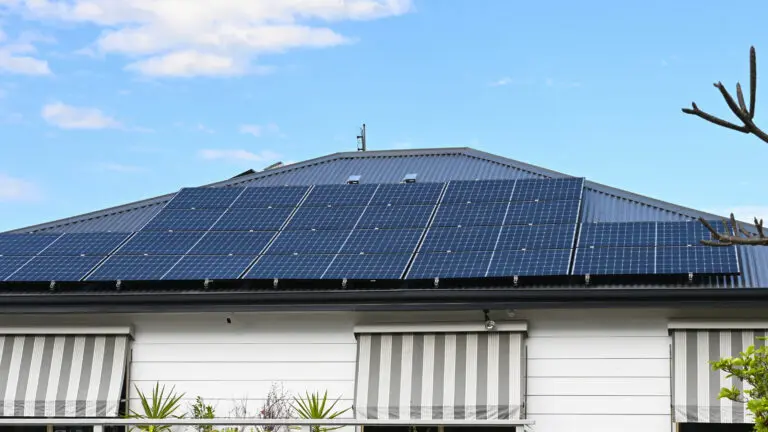
One of the reasons Australia is such an amazing country is that it is much further ahead than most in capturing that free solar energy at the grid edge, coupled with storage. Rooftop solar may feel like new technology, but Australia has been committed to deploying it for more than 25 years.
Now, thanks to a radically clever energy policy, from April 2026 all Australian homes will begin receiving at least three hours of effectively “free” energy each day, whether they have rooftop solar or not. This is due to the significant midday surplus created by rooftop solar panels.
Consumers are running appliances, charging EVs, storing energy in batteries, heating homes through electrification and filling hot water tanks during these periods of surplus supply.
What’s a term or concept in energy that more people should know about?
For consumers: Electricity is invisible. Most homes still have older meters designed as cash registers for energy bills and not much else. The old meters are kind of like an old Nokia phone, and like the rise of smartphones, a new-generation of AI app-powered smart meters changes all that.
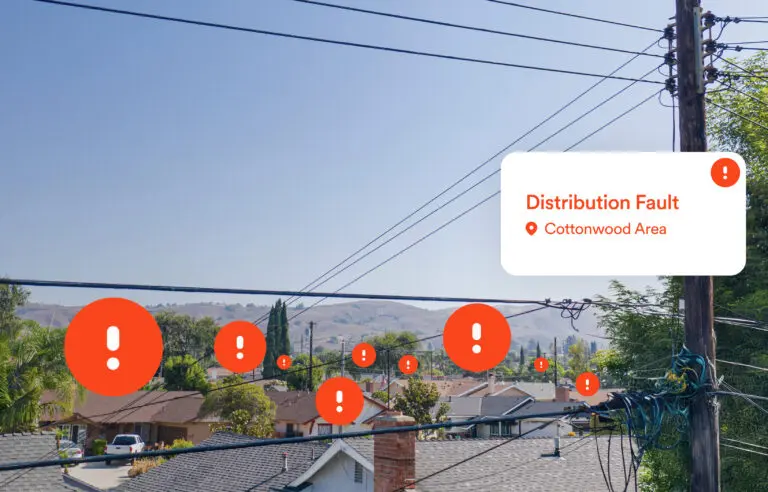
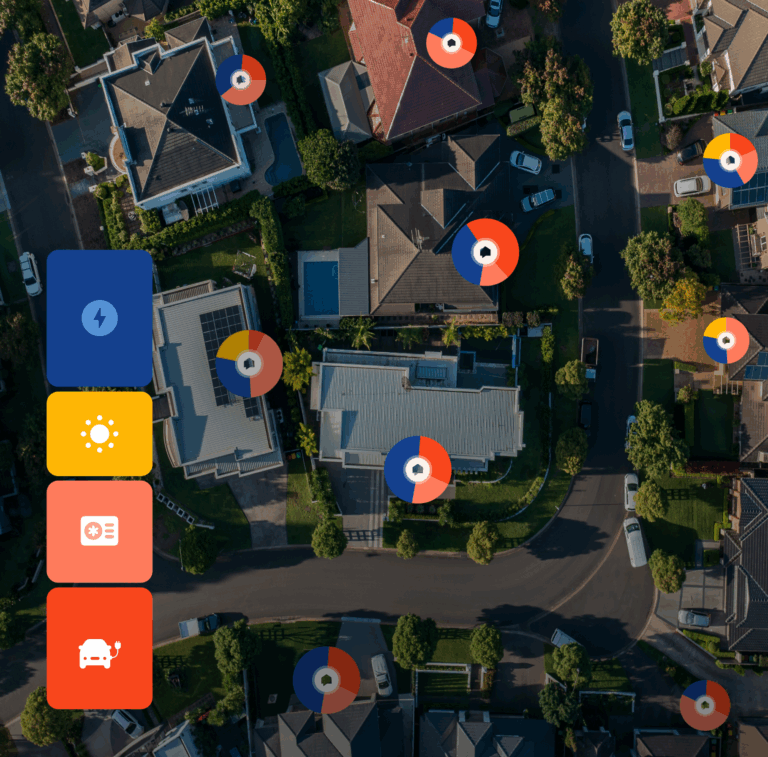
Across a large number of homes on a network equipped with the new generation AI app powered smart meters, energy suppliers can now see where network issues are developing. At the same time, families can gain visibility into how energy is being used, and even wasted, at a device level.
Energy Professionals: Increasingly the energy system is becoming based on consumer behavioural participation. Originally, Demand Side Response (DSR) was entirely behavioural, with communications to consumers offering participation incentives to change their energy behaviour. But it was not considered successful because participation plateaued at 5–15%, and many dropped out when the services lacked device-level detail and were not compelling.
Many DSR operators believed automated IoT systems could avoid dependence on customer behavioural control, and this has become the mainstream approach over the last 2–3 years. But many are finding that adoption of IoT demand response is also plateauing at around 20
Life Outside of Work
What’s something people might be surprised to learn about you?
I’m not really a hiker, but I am a photographer, seeking the best views and fresh air with friends and family bravely agreeing to join me.
I have hiked or walked most of the trails in Smokey Mountains National Park, Yosemite and Tahoe, and in the UK, the Lake District National park completing almost all of the mountains (called fells). In Australia, I’m just starting on the Blue Mountains around Leura Falls and Katoomba. And no matter where I am, I try to get my walking shoes on and watch the sun come up.
What’s your favorite place you’ve ever traveled to?
Several close seconds, but Australia is my favorite – amazing place and amazing people.