Grid Fault Detection That Goes Farther for Utilities
More than 90% of outages originate on the distribution grid, yet many faults remain hard to detect until damage occurs. Learn how grid-edge intelligence can transform distribution grid fault detection and reduce risk for utilities.
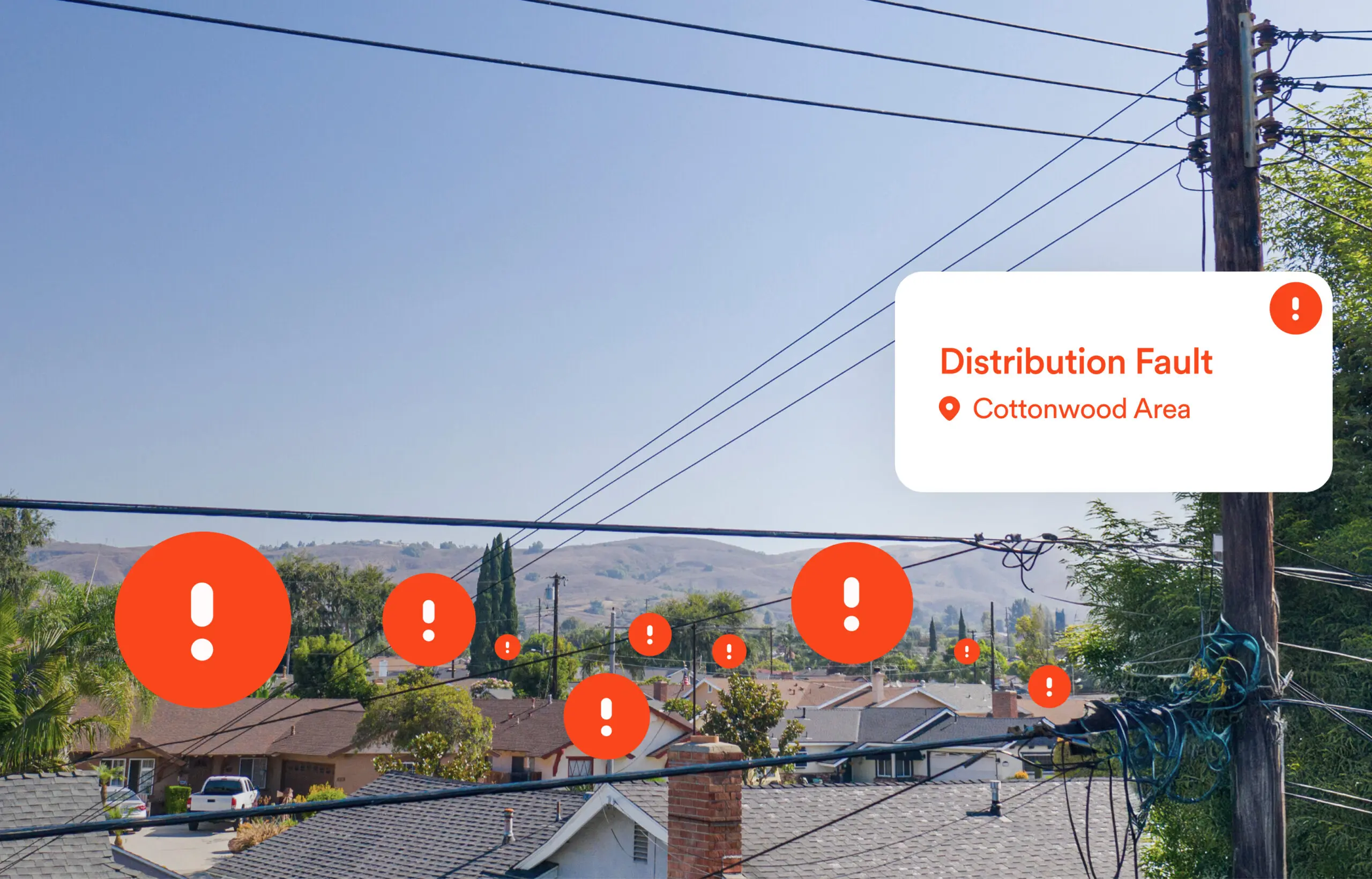
Grid systems are undergoing a dramatic change. As technologies like wind, solar, and EV charging and electrified heating rapidly connect to the distribution grid, utilities are under increasing pressure to control costs, from reactive truck rolls to premature infrastructure replacement. Effective grid fault detection, particularly at the distribution edge of the network, has never been more important.
Transmission networks and generation assets are typically well resourced for monitoring, but distribution grid fault detection has historically received far less attention. Utilities have been forced to rely on a patchwork of legacy systems, centralized analytics built on low-resolution data, and even customer reports before they can respond. As a result, faults are often identified after damage has already occurred, and in many cases without clear visibility into where the problem originated.
With more than 90% of U.S. outages taking place on the distribution grid, utilities need better tools to monitor the low-voltage lines that deliver electricity to homes and businesses. Grid-edge intelligence, delivered through a dense, distributed network of smart meters, is emerging as a new way to close this gap — enabling earlier insight into faults that were previously invisible.
Looking Both Ways at Faults
The faults that occur on distribution networks are often subtle and harder to identify than those on transmission systems, requiring a fundamentally different approach. Next-generation AMI 2.0 technology is enabling a new class of distribution grid fault detection, designed to operate at the scale and complexity of the modern grid.
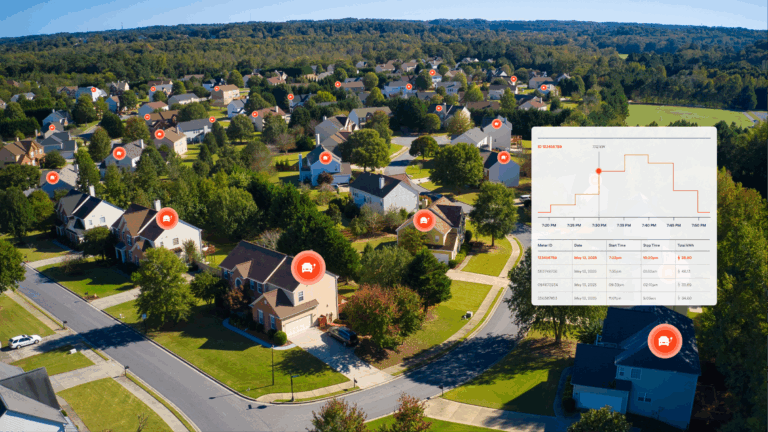
By pushing computing to the grid edge through smart meters with embedded intelligence, high-resolution electrical signals can be analyzed locally on each device. Access to in-home consumption and amperage data provides critical context, allowing utilities to distinguish between faults originating inside a home, on a neighbouring connection, or on the grid itself — a key challenge for traditional approaches.
Machine learning models detect anomalous behaviour in near real time, accurately classifying fault signatures and localizing events across the network, even in dense urban environments. When applied at scale and with full meter density, this distributed intelligence reduces false positives and enables more precise fault localization than centralized, low-resolution analytics alone.
Many faults impacting safety and reliability of the system occur downstream of traditional monitoring points, on secondary and service lines closer to customers. AMI 2.0 fills these critical gaps by observing electrical behaviour both ways across the meter. This level of insight allows utilities not only to understand what has failed, but to anticipate emerging issues on the distribution grid before they escalate.
High sampling rates are crucial for identifying the subtle electrical variations that indicate a developing fault. High-resolution sampling capabilities, up to 1 MHz, combined with the scale of AMI-enabled smart meter deployments, enable utilities to detect where and when faults are forming, without the need to install additional field sensors or remote monitoring equipment.
From Spark to Safety
As climate conditions grow hotter, drier, and more volatile, managing the distribution grid has fundamentally changed. Downed conductors, arcing connections, and degrading equipment can create dangerous conditions long before traditional outage-based detection methods are able to respond.
The value of AMI 2.0-driven distribution grid fault detection lies in early awareness. Arc faults and other electrical anomalies can increase wildfire ignition risk, damage infrastructure, and endanger lives if left undetected. Identifying abnormal electrical behaviour before an outage occurs gives utilities time to assess risk and respond safely.
Line workers are on the frontline of this increasingly hazardous work, often operating in remote or high-risk environments. Many of the most dangerous situations begin with subtle electrical anomalies. Knowing the location and likely nature of a fault before crews are dispatched improves preparedness, reduces exposure to danger, and lowers the risk that an isolated electrical event escalates into a broader emergency.
Early distribution grid fault detection is no longer just about reducing downtime or saving on crew costs; it is critical for wildfire prevention.
AMI 2.0 enables sub-second detection of fault signatures, allowing utilities to rapidly assess risk, de-energize affected segments when appropriate, and dispatch crews with more precise location context. This speed and accuracy significantly reduce the window in which a fault can escalate into a wildfire, helping protect communities, infrastructure, and the grid itself.
A More Resilient Distribution Grid
AMI 2.0 technology means smart meters now deliver far more than basic household consumption data. They provide a platform for intelligent, real-time distribution grid fault detection, extending visibility into arcing, downed lines, and other hazardous conditions as they emerge, or even before failure occurs. This level of insight is essential for maintaining a safe and reliable distribution network.
The benefits extend beyond safety. High-resolution sensing at scale enables faster operational decision-making without the need to deploy new field hardware. More precise fault localization reduces unnecessary truck rolls and ensures crews are dispatched exactly where they are needed. Continuous monitoring also helps identify degrading assets earlier, allowing utilities to focus investment on the highest-risk infrastructure.
With large-scale meter replacements already underway worldwide, decisions made today will determine how much value utilities extract from their AMI investments. The technology to deliver predictable, reliable and safety-focused grid fault detection already exists, enabling utilities to move toward a more resilient distribution grid.